The Current View
A lengthy downtrend in sector prices had given way to a relatively stable trajectory after mid 2013 similar to that experienced in the latter part of the 1990s and first few years of the 2000s.
The late 1990s and early 2000s was a period of macroeconomic upheaval during which time sector pricing nonetheless proved relatively stable.
Relative stability suggests a chance for companies genuinely adding value through development success to see their share prices move higher. This was the experience in the late 1990s and early 2000s.
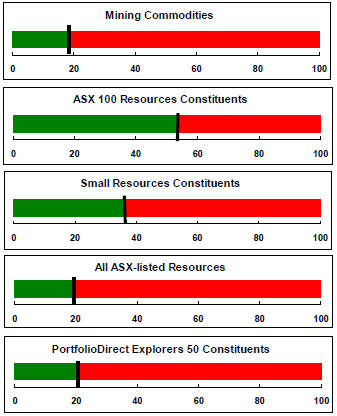
Still vulnerable cyclical conditions were aggravated in the second half of 2015 by a push from investors worldwide to reduce risk. Sector prices were pushed to a new cyclical low. These conditions were reversed through 2016 and 2017 although sector prices have done little more than revert to the 2013 levels which had once been regarded as cyclically weak.
With a median decline in prices of ASX-listed resources companies through the cycle of 89%(and 30% of companies suffering a decline of more then 95%), the majority of stocks remain prone to strong 'bottom of the cycle' leverage in response to even slight improvements in conditions.
Has Anything Changed?
The strength of the US dollar exchange rate since mid 2014 had added an unusual weight to US dollar prices. Reversal of some of the currency gains has been adding to commodity price strength through 2017.
Signs of cyclical stabilisation in sector equity prices has meant some very strong ‘bottom of the cycle’ gains.
Funding for project development has passed its most difficult phase with the appearance of a stronger risk appetite.
Resource Sector Weekly Returns

Market Breadth Statistics
52 Week Price Ranges
Equity Markets
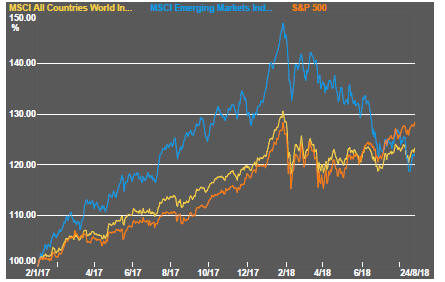

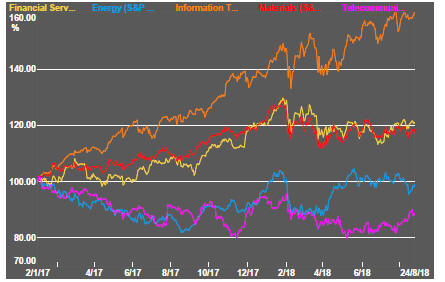

The now familiar mix of international trade uncertainties, solid earnings results, exchange rate moves and interest rate expectations was once again moving markets.
The S&P 500 continued on a rising trend while non-US markets pushed higher after recent weakness. Within the US market, disparate movements in indices remained evident.
Key volatility measures continued to suggest few worries among investors about a change in conditions.
Equity prices strengthened after comments from the Federal Reserve chairman confirmed a gradualist approach to raising interest rates. Federal Reserve colleagues, speaking at the annual gathering of central bankers at Jackson Hole, seemed to confirm two further rate rises during the balance of 2018 but markets appear to have discounted the possibility of a similar frequency of rises during 2019.
A combination of limited interest rate rises and increasing confidence about economic growth outcomes is contributing support to the US equity market. While growth is less attractive elsewhere, beneficial momentum effects from the US performance are trickling down to other national markets.
Trade talks between US and Mexican officials appear to have made progress. Doubts still exist about whether Canada will resume participation in the NAFTA talks but business leaders and investors seem optimistic that a confidence boosting agreement will be reached shortly.
Resource Sector Equities


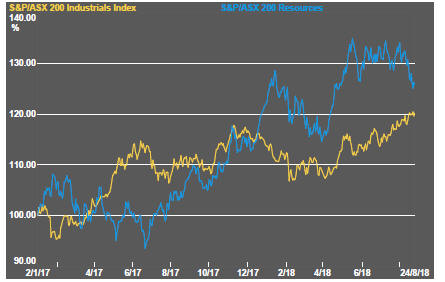
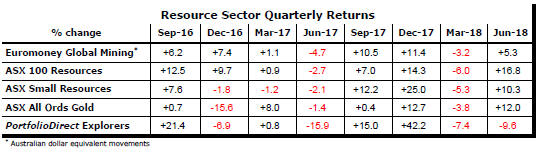
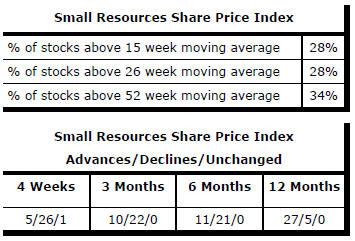
Although resource sector equity prices changed little over the week, the downward bias evident over the past three months persisted and Australian listed stocks fared slightly worse than their International counterparts.
Australian industrial stock prices have continued to outpace returns from resource sector stocks.
Interest Rates

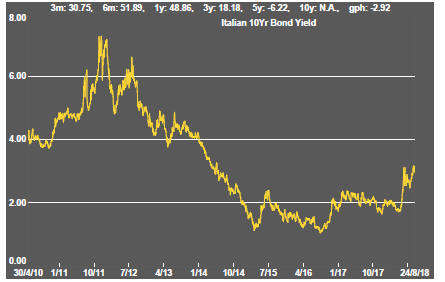
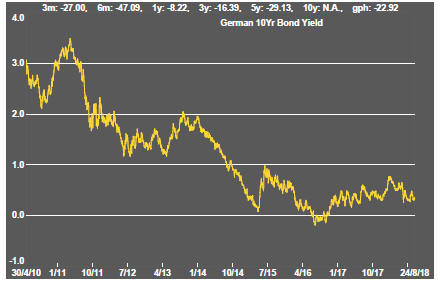

Interest rate movements during the week were limited although the news flow was strong with the annual gathering of central bankers at Jackson Hole creating a focal point for discussions about monetary policy.
Markets appear to have concluded that nothing had been said to disrupt expectations adversely about the direction of interest rates.
For the time being, at least, inflation is well behaved in the major economies. As long as that remains the case, markets seem prepared to assume central banks will not do anything to disrupt financial or equity markets.
Exchange Rates
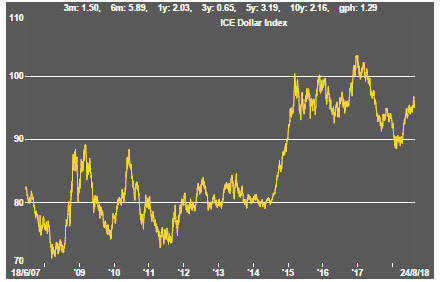

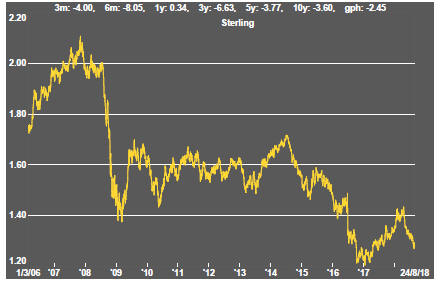

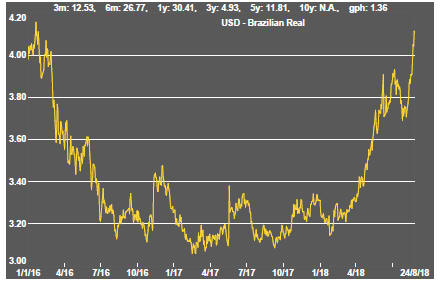

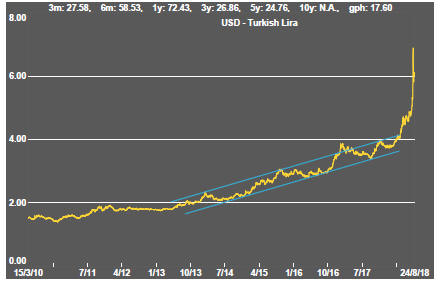


The US dollar partially reversed recent gains against the currencies of its major trading partners. The change in direction was reinforced by the comments of Jerome Powell about his commitment to only gradual changes in interest rate settings. His comments were interpreted in some quarters to mean fewer rate increases in 2019 than had been expected or had been previously outlined by policymakers.
Adding to the impact of the Powell comments were those from Chinese officials suggesting that they intended to modify the downward pressures on the yuan.
Sterling continued to face the consequences of the UK not yet having agreed terms for its exit from the European Union.
Developing country currencies remained under pressure although there have been significant differences in the nature of their respective policy difficulties. As a consequence, investors have placed only limited weight on their predicaments, in assessing the likely impacts on advanced economy markets.
At the same time, the building impression of so many growth constrained developing countries has had a negative impact on expectations about the raw material demand outlook and the impact of that on mining equities.
Commodity Prices
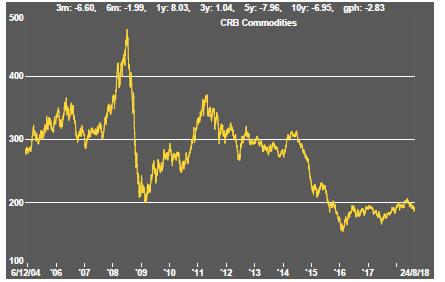
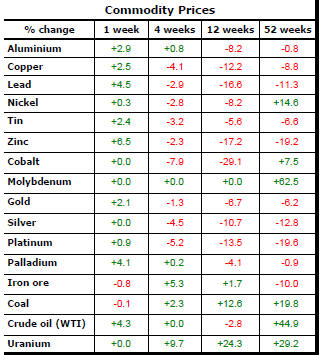
The general upswing in commodity prices since mid 2017 had been given added impetus by stronger crude oil prices.
Diminished momentum has left prices within the bounds of a cyclical trough, albeit at the upper end.
The flip side of the benefits for commodity producers and exporters of higher commodity prices is the cost pressure now being experienced by users of agricultural and raw material commodities. Reporting companies have been suggesting this as a source of margin compression.
Business surveys closely watched by central banks are showing signs of upward pressure on selling prices as a result of higher raw material prices.
Gold & Precious Metals
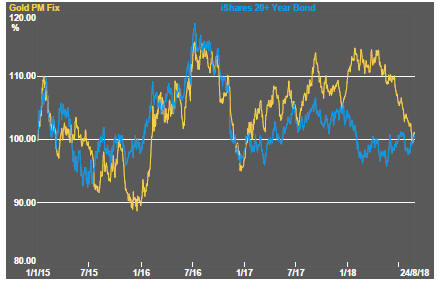

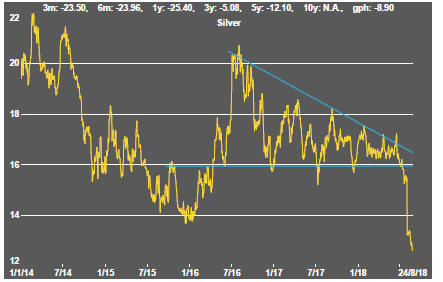

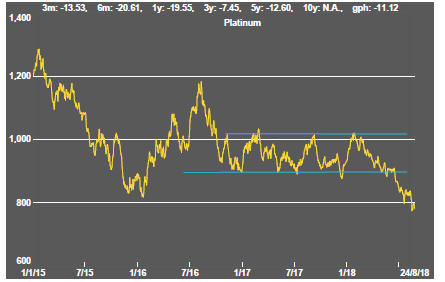
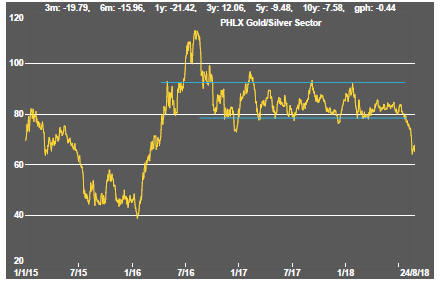

The slump in precious metal prices had continued at least until the US dollar began to rise late in the week. Changed expectations about the speed of future interest rate rises should benefit gold and silver prices although financial markets, more generally, already had been discounting the possibility of an aggressive rate hiking cycle.
Across the precious metal sector, prices have broken through the bounds of prior trading ranges.
Gold and palladium price uptrends have been broken. Platinum prices fell below the lower bound of a two year trading range. Silver prices which had proved relatively resilient have been caught up in the trend to weaker prices.
The divergence in trend between Australian and north American gold related equities has persisted with the size of the gap suggestive of future relative underperformance among the Australian branch of the market.
Nonferrous Metals


Nonferrous metal prices were given a respite from recent downside pressures by a change in currency direction, posting modest gains for the week.
Nonferrous metal prices have been caught up in rising worries about Chinese economic activity in part because of the anticipated impact of US trade policies but also due to Chinese government initiatives to curb excessive lending.
Industry statistics continue to signal that higher prices have been driven by unusually weak demand mitigated by lowered production rates leaving them at risk of reversal as new supplies enter the market in response to price incentives.
Much of the commentary about the decline in copper prices has focused attention on the impact of trade policy. There will have been some effect from this source but prices had shown little net change for the best part of a year amidst a clear loss of momentum before the trade policy issue began to gain traction.
The performance divergence between the copper price and US bond yields suggesting less bullishness within the copper market about the growth outlook might be consistent with the relatively muted response on the part of market yields to the rise in interest rates by the Federal Reserve.
Bulk Commodities
Relatively weak first quarter Chinese GDP growth had suggested a ramp up in activity through the remainder of 2018 if China was going to meet its growth target which, in a centrally controlled economy in which leaders are trying to maintain credibility, is a reasonable assumption.
The difficultly of achieving its targets has now been acknowledged by Chinese officials who have conceded that second half growth may not be as strong as had been expected.
Nonetheless, the Chinese government reported June quarter GDP growth in line with its stated target.
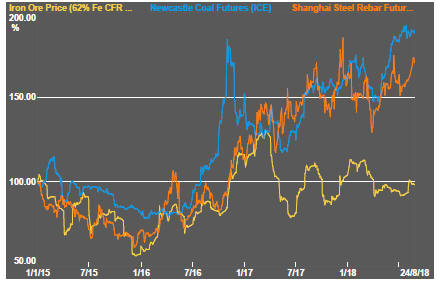
Coal prices have remained firm with demand from China growing at its fastest pace since 2011. Indian port authorities also reported strong growth in coal movements in the second quarter of 2018. Prices have been supported, too, by constraints on supply imposed by financial institutions unwilling to support mine development.
Iron ore prices have remained largely unresponsive to improved demand for steel and ongoing expansion of Chinese manufacturing output.
Oil and Gas

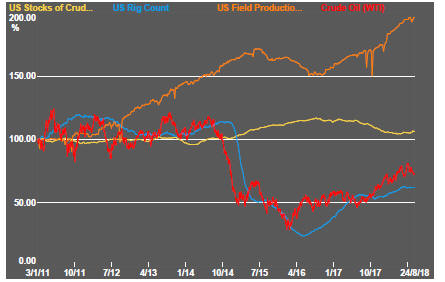
The upward trend in crude oil prices has given way to a leveling out in prices following recent price falls. Prices moved higher in the past week helped by the weaker US dollar but are unchanged over the past month.
OPEC production decisions have helped to support prices as has reimposition of economic sanctions by the US government on Iran. The failure of effective government in Venezuela has been another contributing influence.
The Iranians have been lobbying European countries to prevent more widespread application of sanctions but the likelihood of relief appears slim as long as funds must circulate through US banks.
US production, in any event, continues to rise and is now matching output from Russia and Saudi Arabia. Texas alone is positioned to be the third largest producer after Russia and Saudi Arabia.
Despite the change in tone within crude oil markets, related equity prices have been muted in their responses, implicitly signaling scepticsm about the sustainability of price rises when they have occurred.
Battery Metals


Eighteen months of rising lithium-related stock prices has given way to a prolonged period of market reassessment as a lengthy pipeline of potential new projects has raised the prospect of ongoing supplies better matching expected needs.
Potential lithium producers have been able to respond far more quickly to market signals than has been the case in other segments of the mining industry where development prospects have been slowed by reticence among financiers to back development.
Movements in lithium related equity prices had been aligned more closely with overall sector equity prices in recent weeks although they have not suffered the wider sector sell-off evident in the past two weeks.

Battery metals remain a focal point for investors with recent attention moving to cobalt and vanadium.
Doubts about a peaceful transfer of political power in the Democratic Republic of the Congo (and instances of Ebola) have added a dimension to cobalt prices lacking in other metals caught up in the excitement over transport electrification. Improved political conditions left cobalt prices at risk of some retracement - as has recognition that the surge in future needs for battery storage did not warrant near term price action which reflected more on shortages for traditional uses.
In the longer term, cobalt is the most vulnerable of the battery related metals to substitution with high prices likely to stimulate research in that direction.
A spokesperson for Panasonic, manufacturer of batteries for Tesla motor vehicles, has been quoted as saying that the company intends to halve the cobalt content of its batteries because of uncertainties over supply.
Uranium
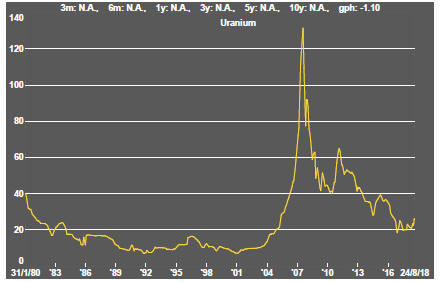
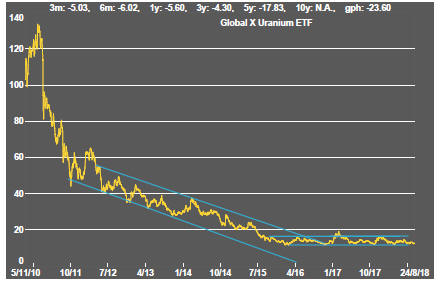
The uranium sector is in the midst of forming a prolonged cyclical trough as market balances slowly improve. Power utilities are still not prepared to re-enter the market for contracted amounts of metal to meet longer term needs. A slight upward bias in prices has been evident in the past month.
Slightly higher equity prices from time to time, in the hope of improved conditions, have not been sustained but could be repeated as speculation about improved future demand ebbs and flows. The effect of an announcement by Canadian producer Cameco to extend the duration of its previously implemented production cut gave the market a very slight but quickly lost lift.

The Steak or Sizzle? blog LINK contains additional commentary on the best performed stocks in the sector and the extent to which their investment outcomes are underpinned by a strong enough value proposition to sustain the gains.