The Current View
A lengthy downtrend in sector prices had given way to a relatively stable trajectory after mid 2013 similar to that experienced in the latter part of the 1990s and first few years of the 2000s.
The late 1990s and early 2000s was a period of macroeconomic upheaval during which time sector pricing nonetheless proved relatively stable.
Relative stability suggests a chance for companies genuinely adding value through development success to see their share prices move higher. This was the experience in the late 1990s and early 2000s.
Still vulnerable cyclical conditions were aggravated in the second half of 2015 by a push from investors worldwide to reduce risk. Sector prices were pushed to a new cyclical low. These conditions were reversed through 2016 and 2017 although sector prices have done little more than revert to the 2013 levels which had once been regarded as cyclically weak.
With a median decline in prices of ASX-listed resources companies through the cycle of 89%(and 30% of companies suffering a decline of more then 95%), the majority of stocks remain prone to strong 'bottom of the cycle' leverage in response to even slight improvements in conditions.
Has Anything Changed?
The strength of the US dollar exchange rate since mid 2014 had added an unusual weight to US dollar prices. Reversal of some of the currency gains has been adding to commodity price strength through 2017.
Signs of cyclical stabilisation in sector equity prices has meant some very strong ‘bottom of the cycle’ gains.
Funding for project development has passed its most difficult phase with the appearance of a stronger risk appetite.

Resource Sector Weekly Returns

Market Breadth Statistics

52 Week Price Ranges

Equity Markets
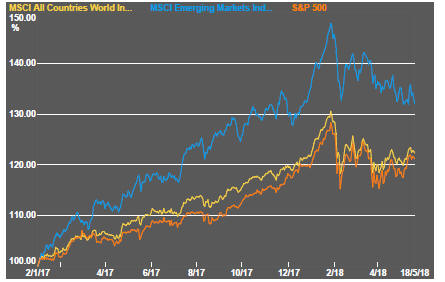


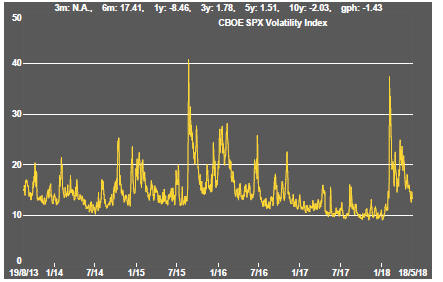
Emerging markets struggled while advanced country markets held levels from the previous week.
As most components of the chief US market indicator declined, smaller stocks moved higher.
The energy sector showed strong gains on the back of stronger crude oil prices.
Simply holding levels could be considered a good outcome against the backdrop of several headwinds which, under other circumstances, might have been far more damaging. Bond yields rising, a stronger dollar, accelerating inflation and disruptions to global trade flows all have negative connotations for industrial sector stocks.
Mixed messages were coming from Chinese and US trade negotiators and from the variety of personnel on the US side. Apparently conciliatory statements from the Chinese side about a willingness to import an additional $200 billion in goods seemed improbable even for a centrally controlled economy.
Within North America, the NAFTA negotiations were also the source of mixed messages about likely outcomes as the deadline from the Speaker of the House of Representatives for legislation this year was missed.
Doubts emerged, too, about whether a leaders meeting between the US and North Korea would proceed as scheduled.
Resource Sector Equities

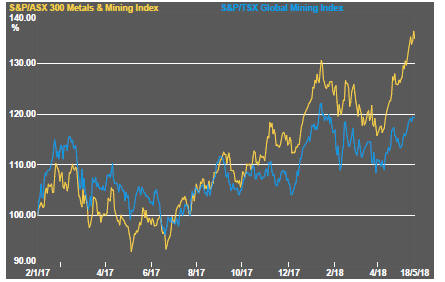
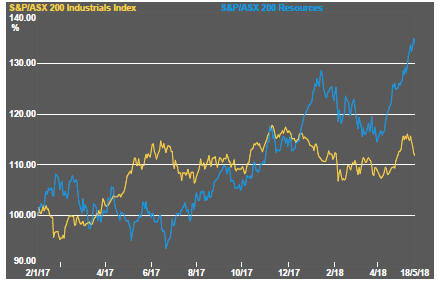

Resources sector equity prices generally maintained the upward trajectory of the past several weeks. The strongest gains came at the top end of the market with a clear loss of momentum among smaller exploration oriented companies.
The gold sector was weaker without higher bullion prices and more often than not with a development and exploration focus. Gold equities have not participated in the cyclical upturn among the industrial metal miners.
Within the Australian context, the benchmark resources indicator ran ahead of a declining industrial market segment.
Interest Rates
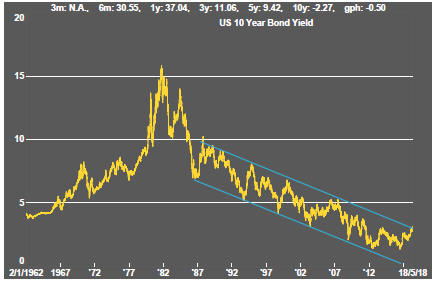


US 10 year bond yields pushed through 3%, a level which has become a focus of attention, but the momentum toward higher yields was not especially strong. Considerable scepticism about the growth and inflation profile for the US economy persists. Should that change, a more dramatic move higher in interest rates is likely.
Protracted negotiatons among Italian politicians over the makeup of a new government put downward pressure on government bond prices as the political parties now likely to form government gave notice that many polices designed to stabilise the financial system after the European debt crisis may be abandoned in favour of a more populous platform.
Exchange Rates

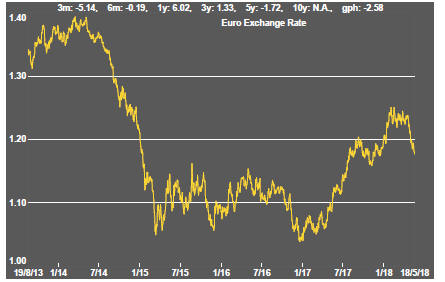

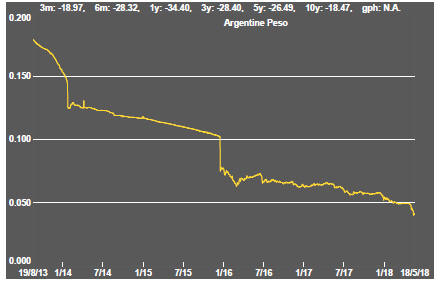
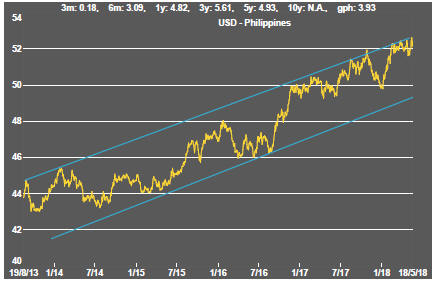
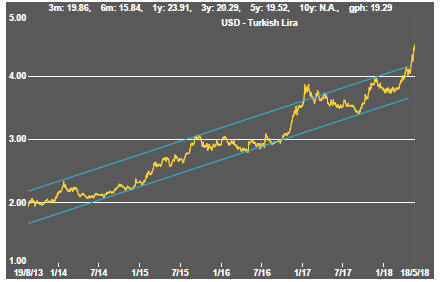
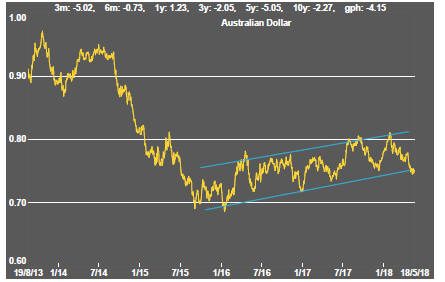
The US dollar edged higher as, once gains, developing economy currencies fell.
The widespread loss in developing country values has arisen coincidentally rather than as a consequence of a common cause. Turkey, Brazil and Argentina, among others, each has peculiar sets of circumstances driving investor sentiment. The contagion which has accompanied developing market routs in past years is absent.
The currency moves also come at a time of relatively strong economic conditions for developing economies.
Ominously, the flight of funds from developing economy currencies might be one of the best indicators that global growth is losing momentum.
The Australian dollar continues to support resource sector outperformance although the currency is at risk of falling lower. Breaking the trend would raise the chance that overseas investors will move to the sidelines while they wait for more stable condtions.
Commodity Prices

The general upswing in commodity prices over the past year has been given added impetus by stronger crude oil prices. The CRB index has pushed back to levels last experienced in 2015. That still leaves prices within the bounds of a cyclical trough, albeit toward the upper end and signifying that stronger growth might be needed for the cycle to develop further.
The flip side of the benefits for commodity producers and exporters of higher commodity prices is the cost pressures now being experienced by users of agricultural and raw material commodities. Reporting companies have been suggesting this as a source of margin pressures.
Business surveys closely watched by the central banks are showing signs of upward pressure on selling prices as a result of higher raw material prices.
Gold & Precious Metals


Bond prices and gold bullion prices moved lower in concert although, if bond prices were the primary driver, gold prices would be considerably lower. That latent source of potential downside pressure remains.
Geopolitical issues - such as the likely abandonment by the US administration of the nuclear weapons deal with Iran - will have helped support gold prices and most likely will continue to do so as long as there is no sign of a resolution or some attempt, at least, to start a new round of negotiations.
US precious metal related equities have lifted from near the bottom of their medium term trading range but remain little changed from mid-2016. Australian gold equity prices moved through the upper end of their recent trading range, helped by the lower Australian dollar.
Nonferrous Metals
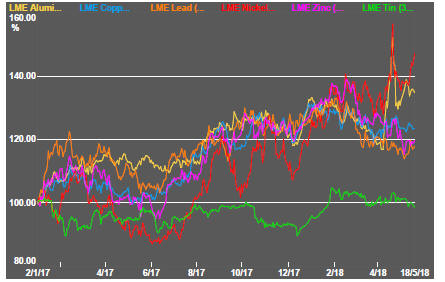
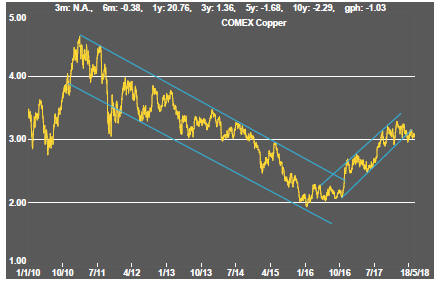
Prices of the main daily traded nonferrous metals had become increasingly correlated as a broadening consensus about the lowered risks to world economic activity emerged and, then, as growth seemed to ebb.
Fresh US sanctions against Russian business interests dramatically impacted aluminium and nickel prices, subsequently.
With comments from the US administration suggesting that the sanctions will not affect metal supplies as severely as had first been suspected, the two metals most affected retraced their sharp gains. That aside, evidence of price convergence remains a feature of the market with only tin prices staying aloof from the crowd.
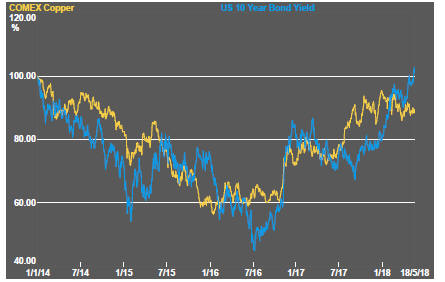
Copper prices again failed to react to the re-pricing of financial assets in the way one might expect to occur if higher bond yields were reflecting a positive reconsideration of the growth outlook.
The divergent price trends imply higher interest rates due to policy considerations unrelated to fears about growth being too strong.
Bulk Commodities
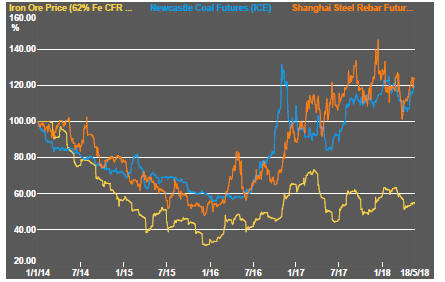
Bulk commodity prices had given up some of their early 2018 gains but had shown some signs of modest recovery in the past two weeks.
Relatively weak first quarter Chinese GDP growth suggests a ramp up in activity through the remainder of 2018 if China is going to meet its growth target which, in a centrally controlled economy in which leaders are trying to maintain credibility, is a reasonable assumption. Firmer bulk commodity prices are a possibility later in the year as China engineers a stronger growth outcome.
Oil and Gas
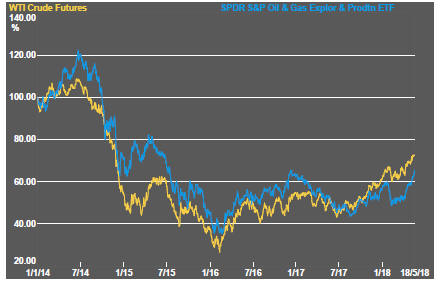

Crude oil prices have reached the highest levels in several years.
Rising US production, partly in response to higher prices, had been seen as a burden on expectations about the likelihood of further oil price rises.
US producers are able to profitably hedge anticipated production contributing to the ongoing rise in their output.
On the other side of the ledger, inventories have been declining and global supplies have remained constrained through both voluntary and involuntary actions.
Fears of deteriorating political conditions in the middle east and Venezuela have also elicited a higher risk premium with the US president committing to stronger economic sanctions against both Iran and Venezuela.
Energy related equities of companies engaged in exploration and production have started to show more significant leverage to the improvement in crude oil prices. The S&P 500 energy sector, dominated by the large integrated oil producers, has once again contributed to the stronger US equity market performance in the past week.
Battery Metals
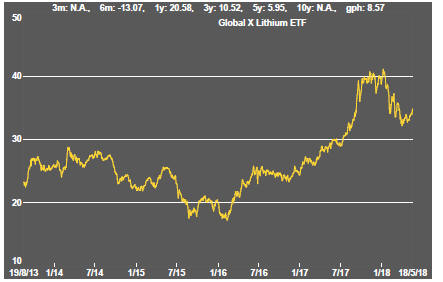
Eighteen months of rising lithium-related stock prices gave way to a period of market reassessment as a lengthy pipeline of potential new projects raised the prospect, although not conclusively, of ongoing supplies being adequate for expected needs.
Potential lithium producers have been able to respond far more quickly to market signals than has been the case in other segments of the mining industry with development prospects.
The lithium segment rise in the past week was well within the bounds of improved overall sector equity prices.

Battery metals remain a focal point for investors with recent attention moving to cobalt and vanadium.
Doubts about a peaceful transfer of power in the Democratic Republic of the Congo (and an Ebola outbreak) has added a dimension to cobalt prices lacking in other metals caught up in the excitement over transport electrification.
In the longer term, cobalt is the most vulnerable of the battery related metals to substitution with high prices likely to stimulate research in that direction.
Uranium

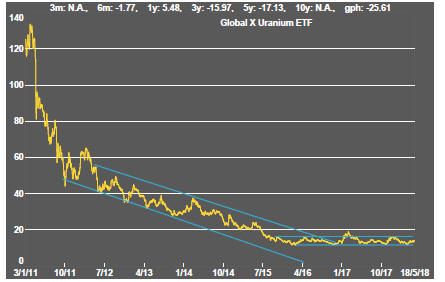
The uranium sector is forming a cyclical trough as market balances gradually improve but in the absence of more meaningful signs that power utilities are prepared to re-enter the contract market to negotiate longer term needs.
Slightly higher equity prices from time to time, in the hope of improved conditions, have not been sustained but could be repeated as speculation about improved future demand continues.

The Steak or Sizzle? blog LINK contains additional commentary on the best performed stocks in the sector and the extent to which their investment outcomes are underpinned by a strong enough value proposition to sustain the gains.

